Blog

  • Sustainable Seeds: Updates from the Newberry Springs Garden Club

    Sustainable Seeds: Updates from the Newberry Springs Garden Club

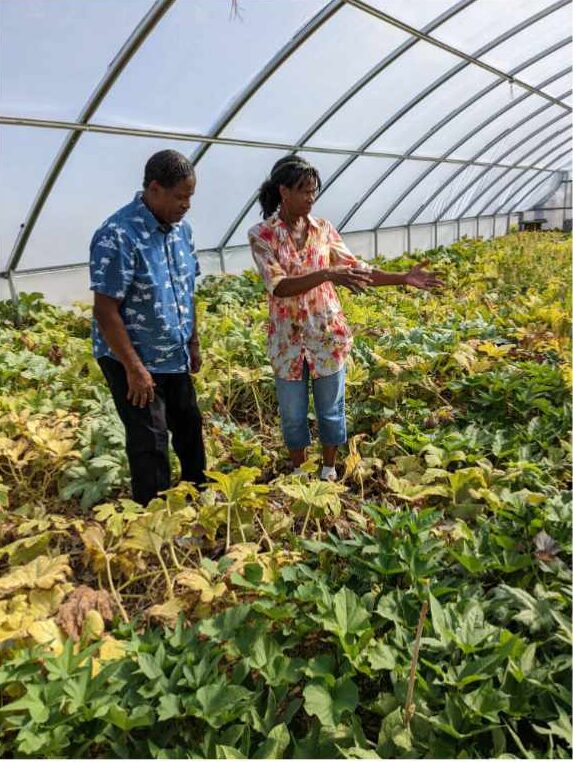
    The Newberry Springs Garden Club continues to be the primary knowledge exchange for our local green thumbs. This month, we are focusing on “Desert-Hardy Varieties”—selecting seeds that have evolved to thrive in our specific micro-climate. By sharing seeds and starts among neighbors, we are building a localized “Seed Bank” that is far more resilient than anything bought at a big-box store.

    In addition to our monthly swap, the club is highlighting low-volume drip irrigation setups. These systems are essential for maintaining our lush home gardens while staying within our community’s water conservation goals. Whether you’re growing heirloom tomatoes or desert lavender, the Garden Club is here to ensure your garden thrives as a sustainable asset to the Newberry Springs ecosystem.

    This Month’s Focus:

    • The Heirloom Swap: Exchange seeds that have successfully fruited in Newberry soil.
    • Drip Logic: Transitioning from overhead spray to targeted root-zone watering.
    • Garden Mentorship: Pairing experienced growers with new residents.
  • Hardening the Earth: Prepping Your Soil for the 100-Degree Shift

    Hardening the Earth: Prepping Your Soil for the 100-Degree Shift

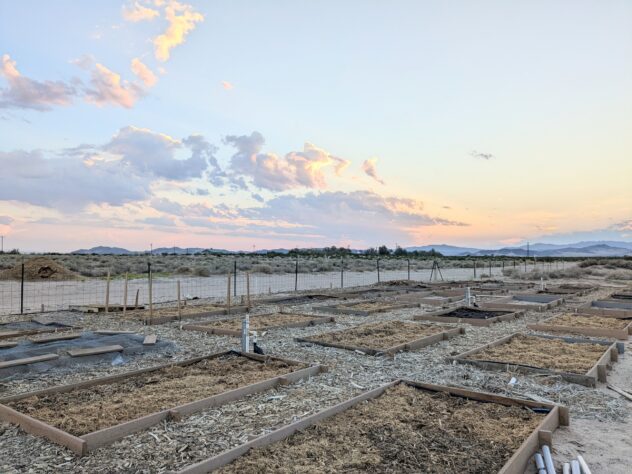
    In Newberry Springs, our soil deals with extreme temperature swings that can bake the life out of a garden in a single afternoon. To survive the upcoming summer heat, your preparation must start at the root level. The “Mulch and Mend” strategy is the most effective way to maintain moisture and prevent soil compaction.

    Start by integrating organic matter—compost or well-aged manure—at least six inches deep to improve water retention. Then, apply a thick layer (3–4 inches) of light-colored mulch, such as straw or wood chips, around the base of your plants. This acts as a thermal blanket, keeping soil temperatures up to 20 degrees cooler than the ambient air and reducing evaporation by half.

    Summer Prep Checklist:

    • Amend Early: Feed the soil before the heat stresses the plants.
    • The “Finger Test”: Check moisture levels 2 inches down; surface dryness is a desert illusion.
    • Windbreaks: Protect young crops from the dehydrating effects of high-velocity Mojave winds.
  • Legacy in the Loam: A Spotlight on the Patrick Family Farm

    Legacy in the Loam: A Spotlight on the Patrick Family Farm

    For generations, the Patrick name has been synonymous with the agricultural heartbeat of Newberry Springs. The Patrick Family Farm stands as a testament to the resilience required to thrive in the High Desert. Specializing in high-quality alfalfa and sustainable livestock management, the Patricks have demonstrated that desert farming isn’t about fighting the environment—it’s about partnering with it.

    By utilizing time-tested irrigation techniques and a deep understanding of the Lower Mojave River Valley Basin, the Patrick Family Farm has become a local benchmark for productivity. Their commitment to rural preservation ensures that the “Green Belt” of Newberry Springs remains a vibrant part of our community’s identity, providing a blueprint for the next generation of desert growers.

    What We Can Learn:

    • Basin Stewardship: Efficient water use that respects adjudicated limits.
    • Crop Rotation: Maintaining soil health in a high-alkaline environment.
    • Heritage: The importance of keeping family-owned agricultural land productive.
  • Beyond the Factory Floor: Vandelay’s Infrastructure Synergies

    Beyond the Factory Floor: Vandelay’s Infrastructure Synergies

    Integration success in the Mojave requires more than just land; it requires synergy. Vandelay Industries serves as the blueprint for how modern industry can harmonize with Newberry Springs’ infrastructure. By co-locating near the I-40 corridor, Vandelay tapped into a high-velocity export lane while utilizing local water resources managed through the NSEDA’s resource-advocacy protocols.

    Using the NSEDA Project Manager, Vandelay and local leadership tracked milestones for utility hookups and rail-spur access in a shared environment. This case study proves that when a company utilizes the NSEDA Business Portal, they aren’t just getting a plot of land—they are gaining a technical partner dedicated to their long-term operational success.

    The “Vandelay Blueprint”:

    • Resource Mapping: Strategic use of the Lower Mojave River Basin water allocations.
    • Logistics Optimization: Utilizing the I-40/I-15 crossroads for 24-hour turnaround to Pacific ports.
    • Community Transparency: Using the Portal to maintain open, secure lines of communication with the Board.
  • Case Study: How Vandelay Industries Accelerated Relocation via the NSEDA Portal

    Case Study: How Vandelay Industries Accelerated Relocation via the NSEDA Portal

    When Vandelay Industries identified Newberry Springs as their preferred Western United States hub, the primary challenge was the secure exchange of proprietary site plans and environmental impact data. By utilizing the NSEDA Business Portal, Vandelay’s executive team was able to bypass traditional bureaucratic delays.

    Through the Secure Vault, Vandelay uploaded sensitive blueprints and logistical requirements directly to our Economic Development team. This “Digital First” approach allowed for real-time feedback and coordination with local stakeholders without a single document ever entering the public domain. The result? A 30% reduction in the traditional “pre-development” timeline and a seamless transition into the High Desert industrial landscape.

    Integration Highlights:

    • Confidential Coordination: Proprietary data remained encrypted and siloed.
    • Direct Communication: The Board provided immediate guidance via the Support Center.
    • Document Integrity: All finalized permits and agreements are now archived in their permanent Secure Vault.
  • Export Excellence: Facilitating Global Trade from the High Desert

    Export Excellence: Facilitating Global Trade from the High Desert

    Newberry Springs has a long-standing history as a productive export hub, specifically in the realm of high-quality alfalfa and specialized mineral resources. Our logistics infrastructure is purpose-built to move heavy, high-volume goods from the field to the freeway and, eventually, to international ports.

    The Silver Valley’s proximity to the Daggett Airport and the Barstow rail yards ensures that local products—whether they are “Desert Gold” alfalfa for international dairy markets or locally extracted minerals—have a clear path to global buyers. We are focused on expanding these export capabilities by inviting value-added processing facilities to co-locate alongside our transportation corridors, turning raw desert resources into finished global exports.

    Strategic Export Features:

    • Heavy-Duty Access: Roadways designed to accommodate high-GVW (Gross Vehicle Weight) agricultural and industrial transport.
    • Intermodal Connectivity: Minutes away from the Barstow Intermodal facility, connecting local trucks to national rail.
    • Scalable Zoning: Land ready for the development of dehydration plants, packing houses, and processing centers.
  • Bridging the Gap: Newberry Springs as a Regional “Inland Port”

    Bridging the Gap: Newberry Springs as a Regional “Inland Port”

    The logistics landscape of Southern California is shifting eastward. With industrial vacancies in the Inland Empire West at historic lows, supply chain managers are looking toward the “High Desert Gateway” of Newberry Springs. Our location serves as a natural “Inland Port”—a strategic staging ground where bulk freight from the Ports of Los Angeles and Long Beach can be decentralized before moving into the Great Basin and the American Southwest.

    By utilizing Newberry Springs for “middle-mile” logistics, companies can bypass the terminal congestion of the basin, utilizing our expansive flat acreage for container storage, break-bulk operations, and regional sorting. We aren’t just a pass-through on the I-40 or I-15; we are the strategic pause that makes regional export more efficient.

    Key Advantages:

    • Space for Staging: Vast, flat topography ideal for large-scale equipment and container yards.
    • Reduced Overhead: Significantly lower land costs and tax burdens compared to San Bernardino and Riverside hubs.
    • Direct Rail Links: Proximity to the BNSF “Transcon” route, one of the busiest freight lines in the world.